· Classroom will be set up in to 5 pods to represent the 5 ancient civilizations. Each pod will further be divided into 2 groups, each representing a certain resource which they control
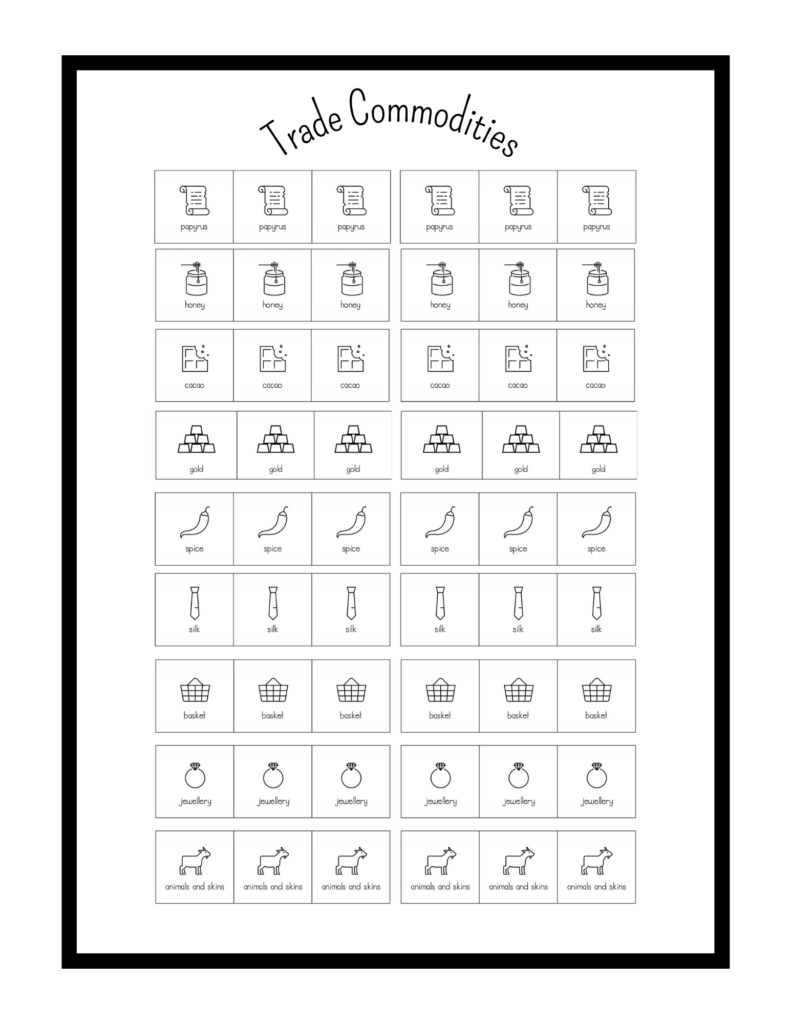
Egypt: Papyrus and Gold, China: Silk and Spice, Maya: Honey and Cacao, Mesopotamia: baskets and jewelry, AND India: animals and spices
· At the beginning of the game, each resource will send one representative to the middle of the room to roll a die. The outcome of the roll will determine how many resources they will get started with. If the team rolls a 1 or 2, they will start with 2 of the resource, all other rolls will be the corresponding resource amount
· The goal of the game is to collect all the resources by the end of the time allotted, the team with the most resources of other civilizations wins. Once the teams have gained a resource, they place it on there poster.
· Teams will rotate in turns, each team will out a certain amount of resource up for trade and have to make they’re plea with the other civilizations to make trade deals in a timely manner. This will hopefully enact team work; group deals are allowed between resources from the same civilizations or different. Depending on the number that is rolled between 2-12, there is a corresponding result for each number
| 2 | Easy Pick (1) | 7&8 | Deal! |
| 3 | No Deal | 9 | Deal! |
| 4 | Deal! | 10 | Get Lost |
| 5 | Natural Disaster | 11 | Lost Ship |
| 6 | Deal! | 12 | Easy Pick (2) |
· After the game has concluded, we will ask a few questions just to tie what we just did back to the lesson.
- What was the easiest resource to get and what was the hardest? What does this mean?
- What were some of the blockades or troubles you had trading?
- If we think about the indigenous people of Canada before colonization, what were the biggest assets for trade? (geographically, culturally, etc.?)
- Fast forward to today, how is trade different now?
Next class we will look into the rise and falls of ancient civilizations