This experiment cluster focused on mixtures.
Each group was composed of 4-5 students, with six groups in total. Every group had a different experiment to conduct:
- rubbing alcohol and water (food colouring)
- soap and water
- salt and vinegar
- snow and water
- flour and water
- vinegar and oil
Students initially worked alone to write a hypothesis and guiding question, and then they worked together to create a procedure and materials needed.
One student from each group grabbed their supplies from the side of the room (pre-organized), while another pick up paper towel – just in case.
- Pour the solvent into a cup, write or draw how it looked as an observation.
- Add solute, do not stir, and let sit for a minute, write or draw an observation.
- stir the mixture – write or draw an observation.
- Discuss with the table group, write conclusion.
- Order selves into a group with students from other groups to share findings.
Students were able to determine if they created a heterogenous or homogenous mixture and then able to discuss and describe what they saw! This helped solidify their understanding of solutions and then they were able to share their findings, which is important to beginning confidence.
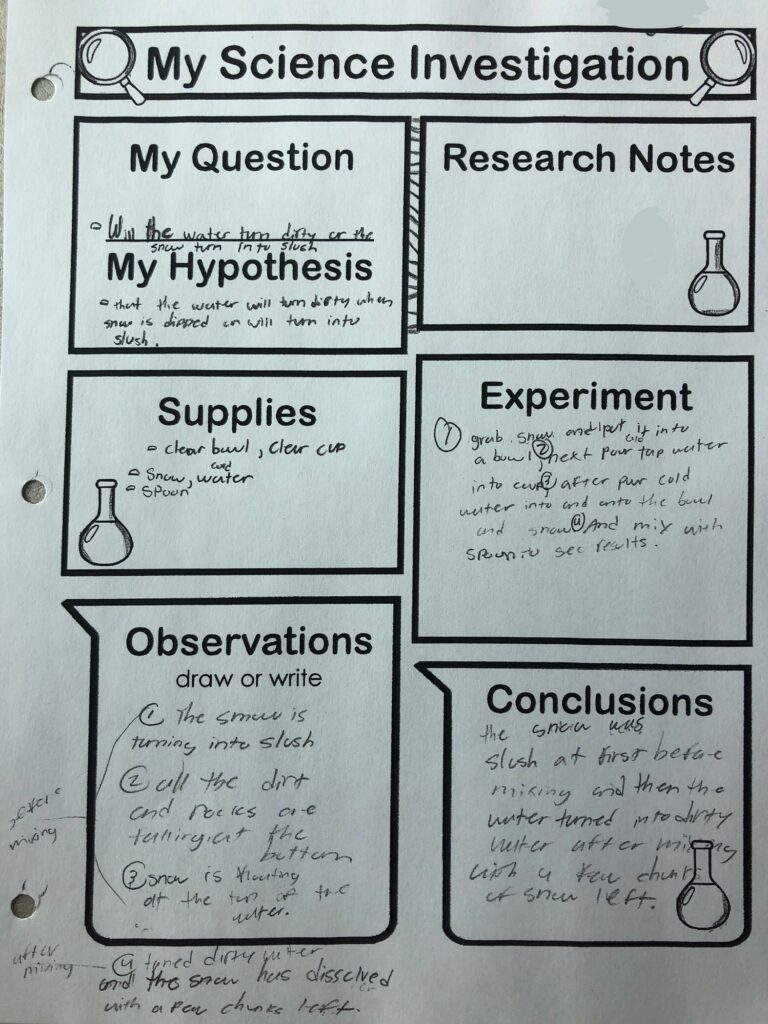
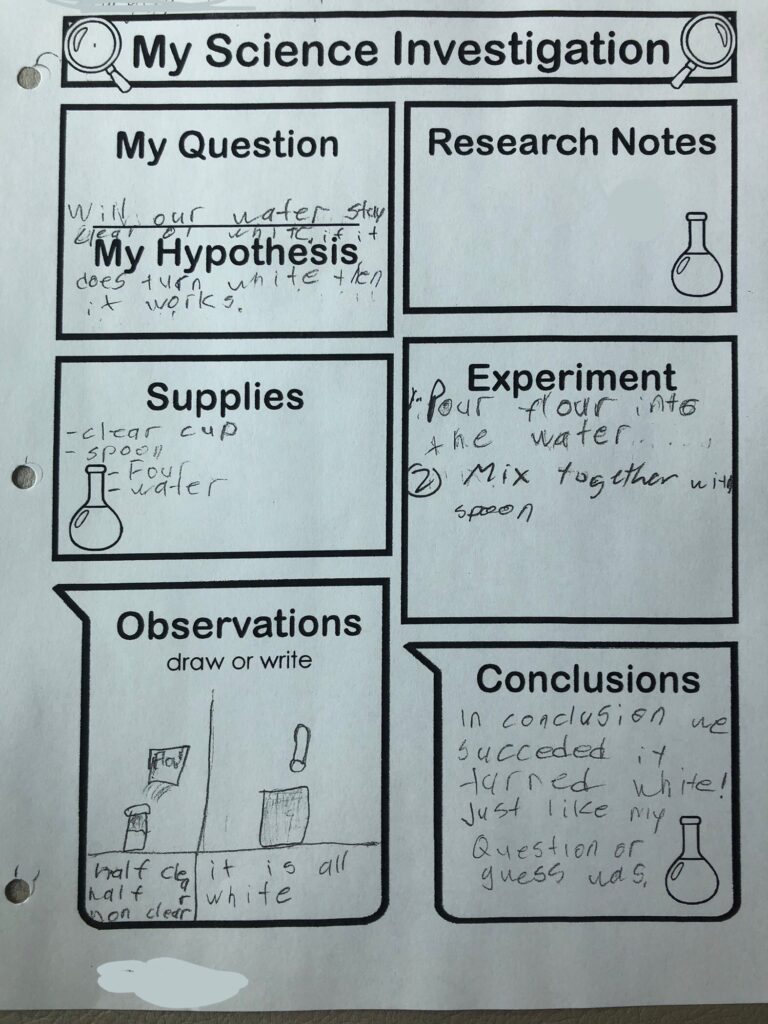
Here is the experiment hand out that I made!
Core Competency: Critical Thinking
Facet: Questioning and investigating
Profile: I can ask questions and consider options. I can use my observations, experience, and imagination to draw conclusions and make judgments.
First Peoples Principles of Learning: Learning involves recognizing the consequences of one’s actions.
Big Ideas:
- Solutions are homogenous (5)
Curricular Competency:
- Communicate ideas, explanations, and processes in a variety of ways (5)
Content:
- Solutions and solubility (5)