
When discussing separating mixtures, separating colours came to mind – which in this case is separating the chlorophyll from the carotenoid from the anthocyanin. This was a connection to the pigments that can come from nature and natural systems.
I invited the IEW into the classroom for this activity, wrote our hyptheses, and we headed outside to collect leaves (that had already fallen). Students learning outdoors is so much fun, and the weather was nice for the afternoon, so it was serendipitous.
Once every student had collected their leaves, we returned inside, ripped or cut up our leaves and placed them into plastic cups (reusing them from the evaporation experiment), students then signalled that they were ready and grabbed a coffee filter strip. I poured 70% rubbing (isopropyl) alcohol on top of the leaves so that they were covered, students then stirred so that the green pigments from the leaves dyed the alcohol.
Once dyed, students set their coffee filter strips so one end was touching the solution, and one end was draped over the edge of the cup. We set up the experiment on the back table (then moved to the windowsill).
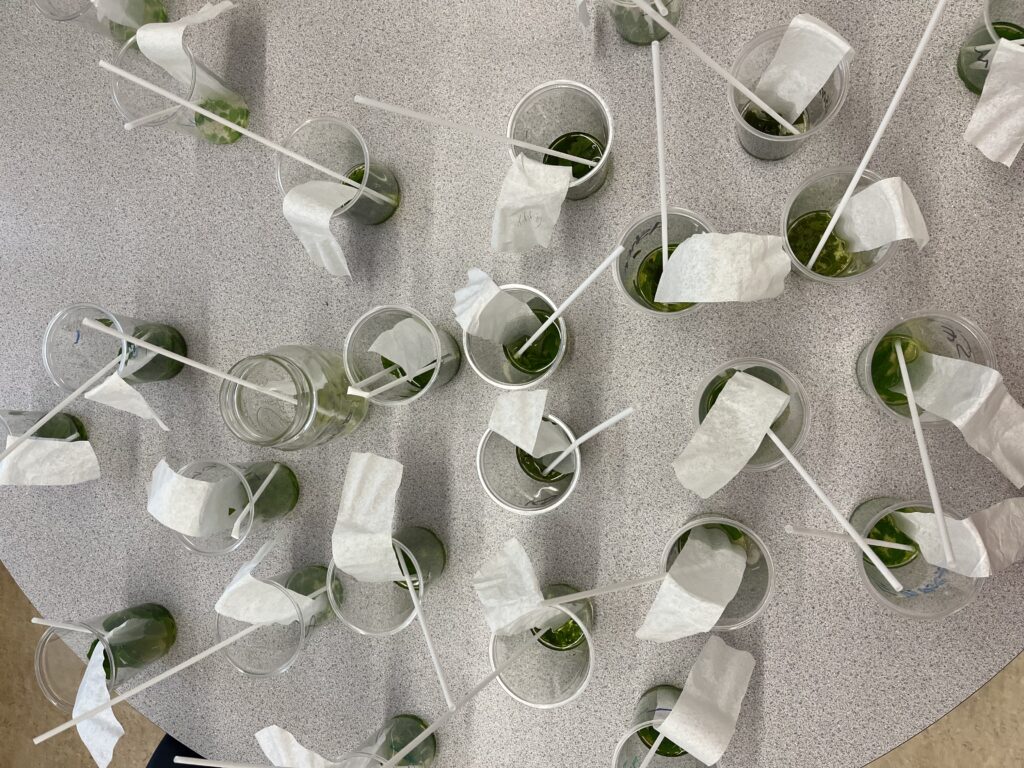
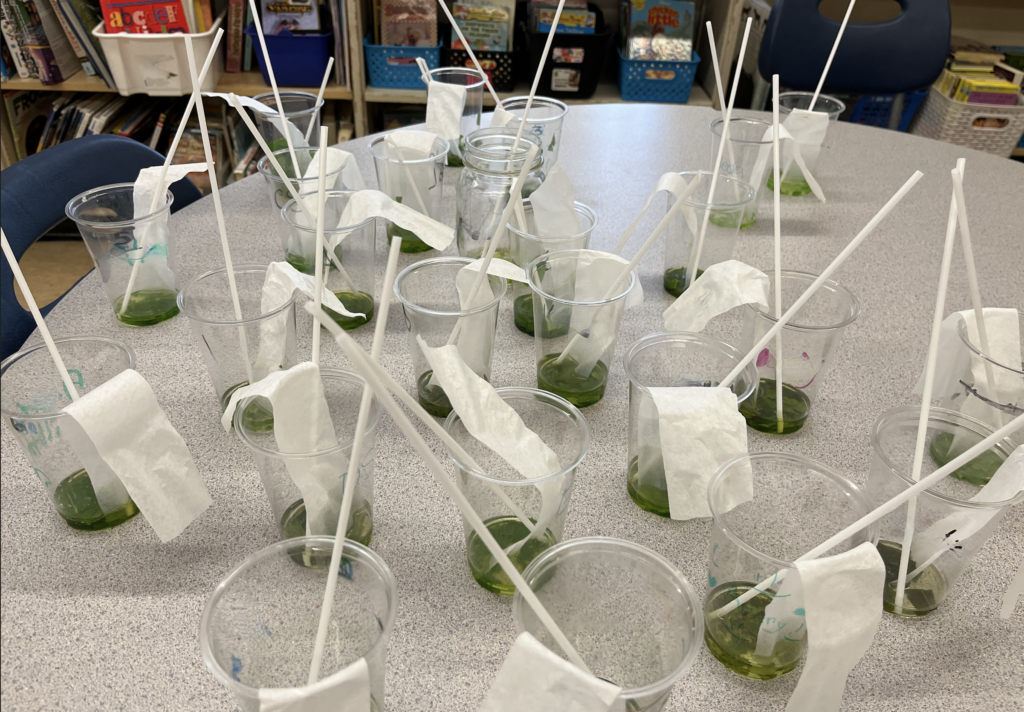
After school, I checked on the progress of the experiment and to my surprise it had started.
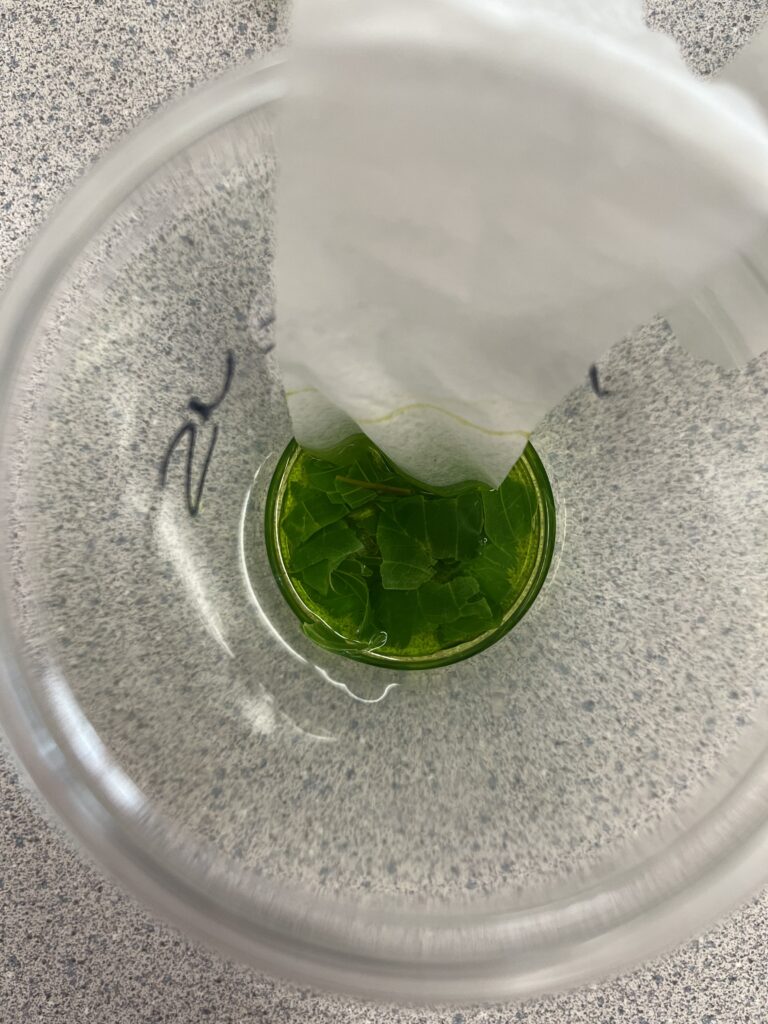
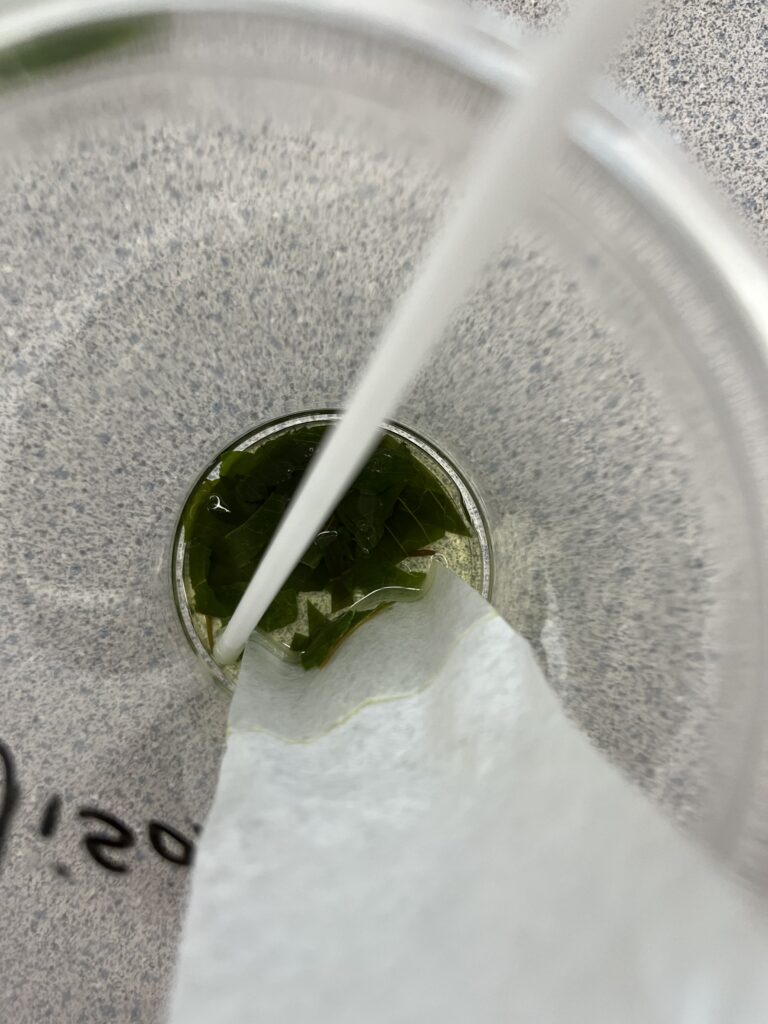
The following morning, the experiment was well underway:
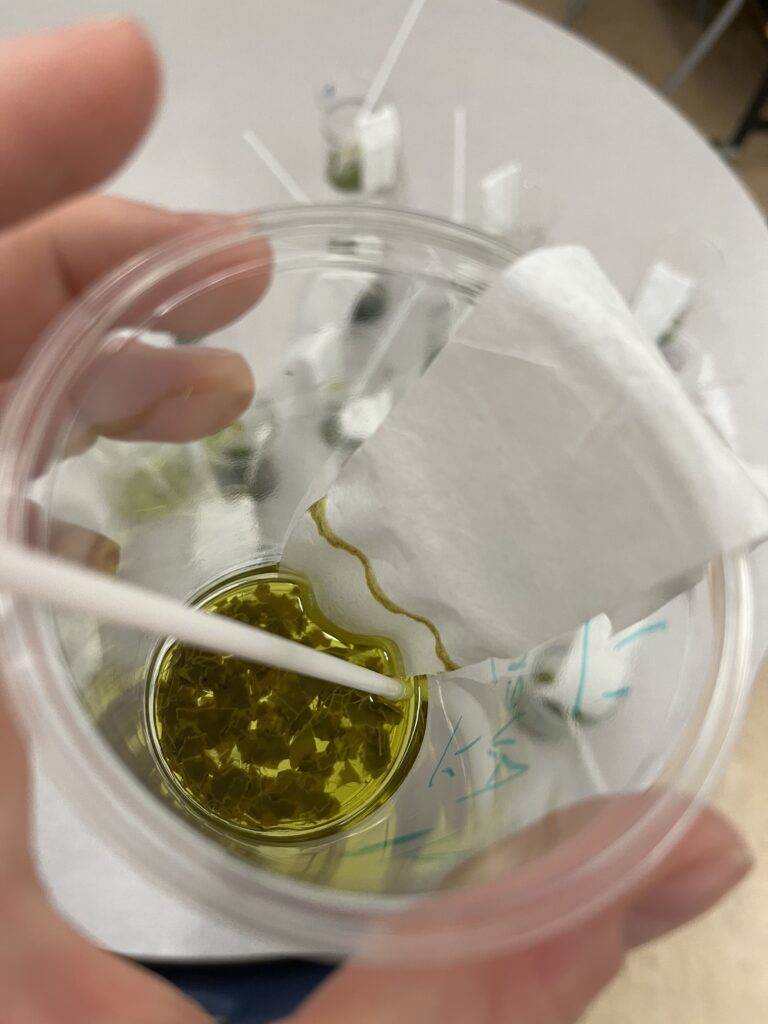
And one final check after school that day:
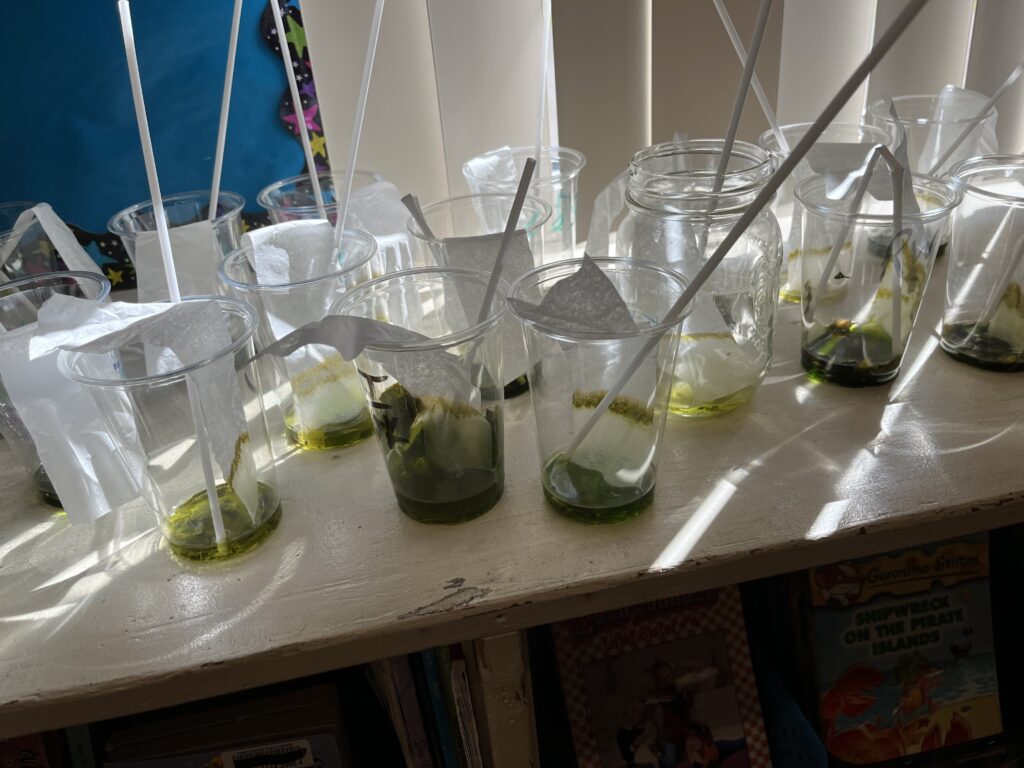
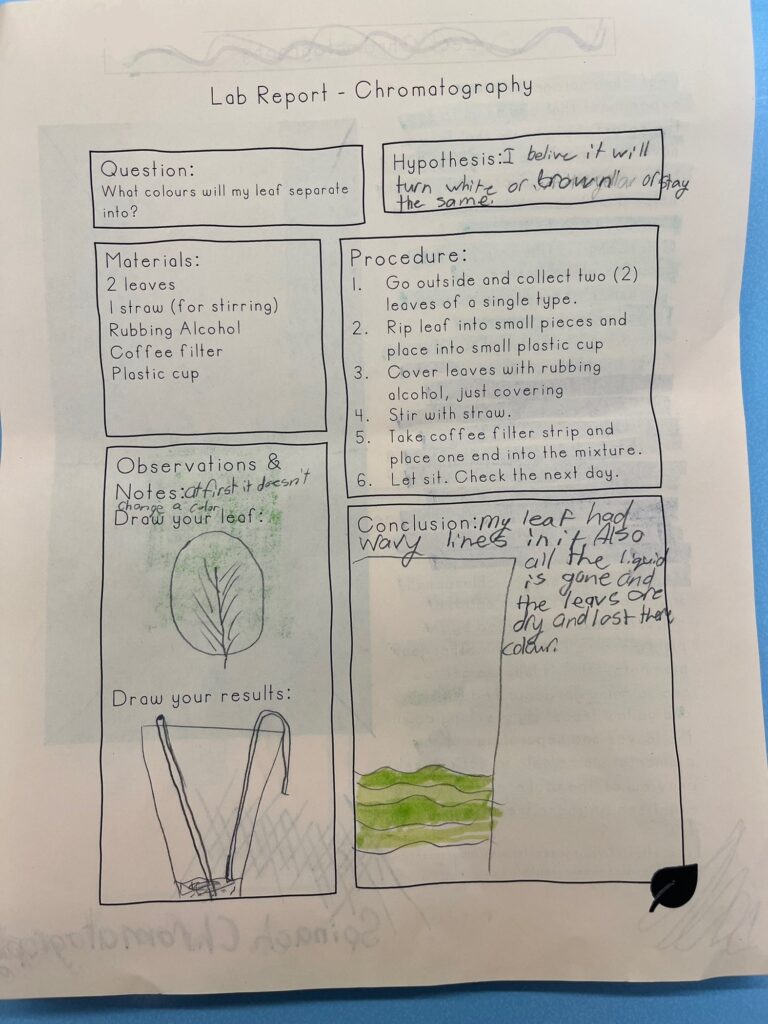
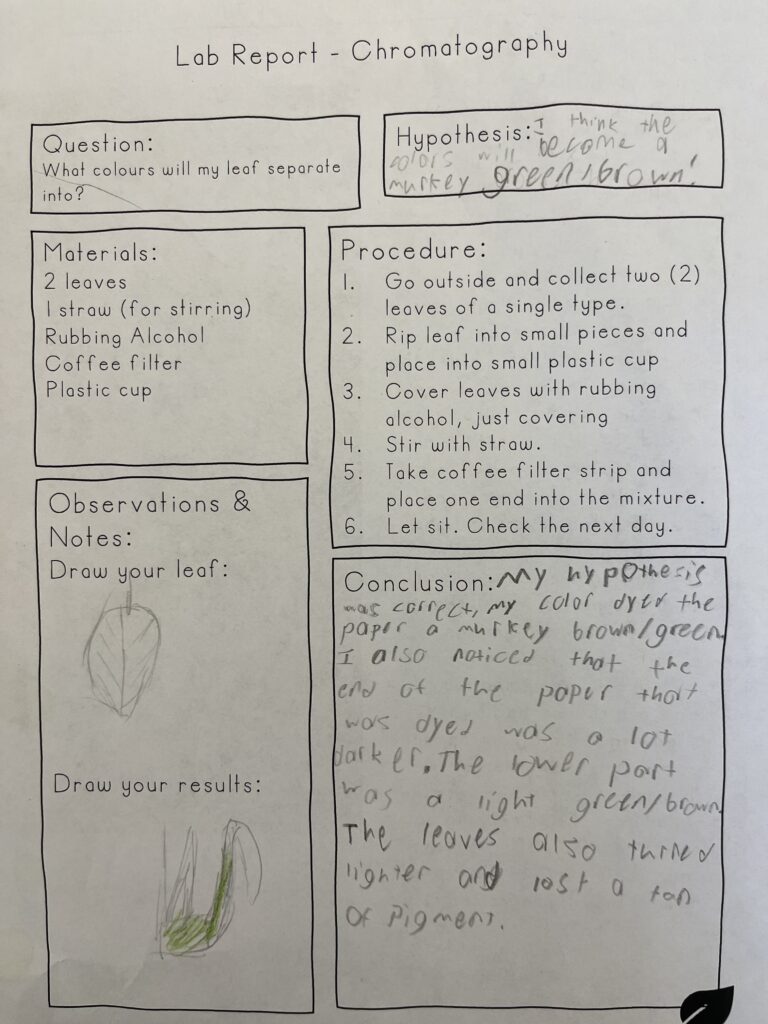
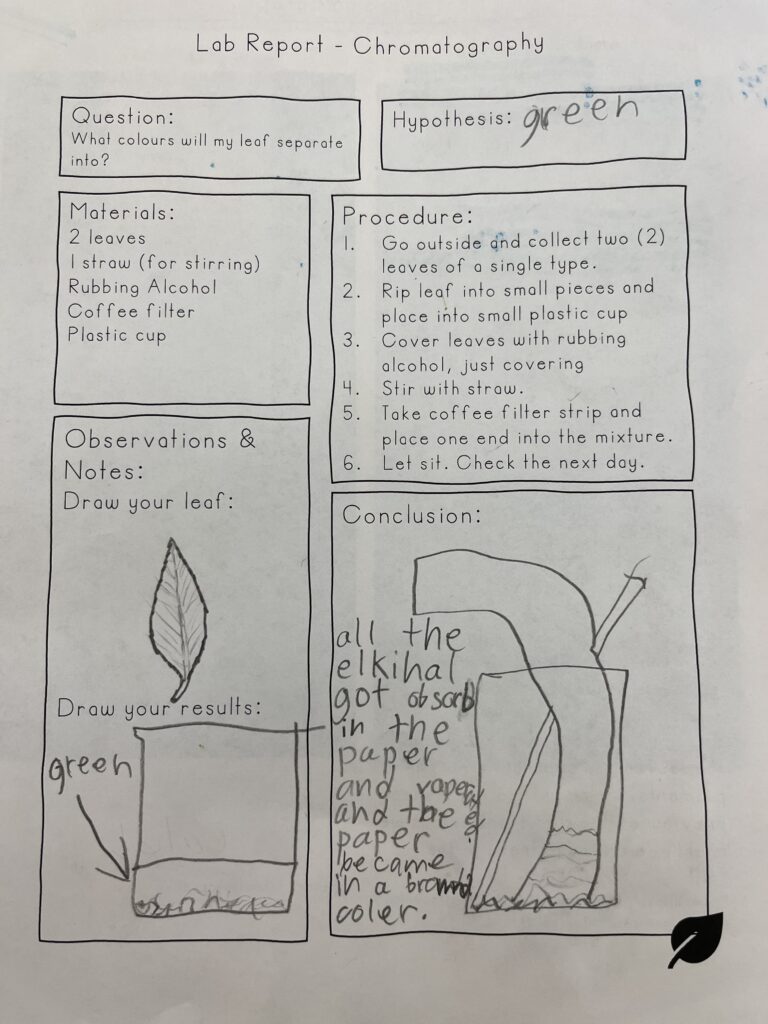
Students wrote their conclusions on Friday – many had interesting ideas and some of their conclusions really disagreed with their hypotheses (which was good to see their thinking!).
Core Competencies: Critical Thinking
Facet: They reflect on and assess their experiences, thinking, learning processes, work, and progress in relation to their purposes.
Profile: I can ask questions, make predictions, and use my senses to gather information.
First Peoples Principles of Learning: Learning involves patience and time.
Big Ideas:
- Solutions are homogenous (5)
- Everyday materials are often mixtures (6)
Curricular Competencies:
- Observe, measure, and record data, using appropriate tools. (5&6)
Content:
- solutions and solubility (5)
- mixtures: separated using a difference in component properties (6)