To wrap up our discussion on Japanese Internment in Canada, I asked my students to become historians – looking beyond their initial thoughts about the photos they were provided and giving insight into their inquiry.
I split up the class into 8 groups – trying random groupings as suggested by Dr. Liljedahl – each group was given a different photo.
I split the page in two, the first half was created for students to write questions that they have about the pictures, and the other was meant for their responses to their questions.
Students were given about 20 minutes to write their questions and answers, some thought of all their questions first and finished by answering their questions, others answered their questions as they went. For the final 10 minutes of class, students lead the discussion by reading their questions and sharing their ideas! It was really interesting to see the levels of questions that students had. Some of the ideas that students shared did not necessarily correspond to their questions – which lets me know I need to be clearer in directions.
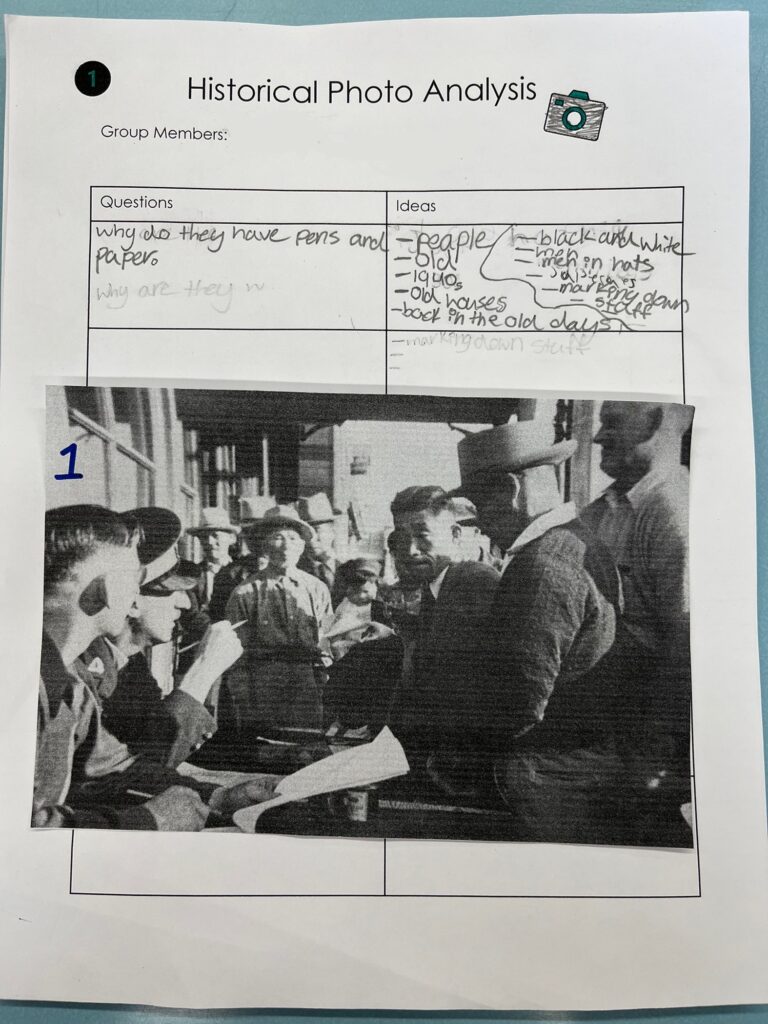
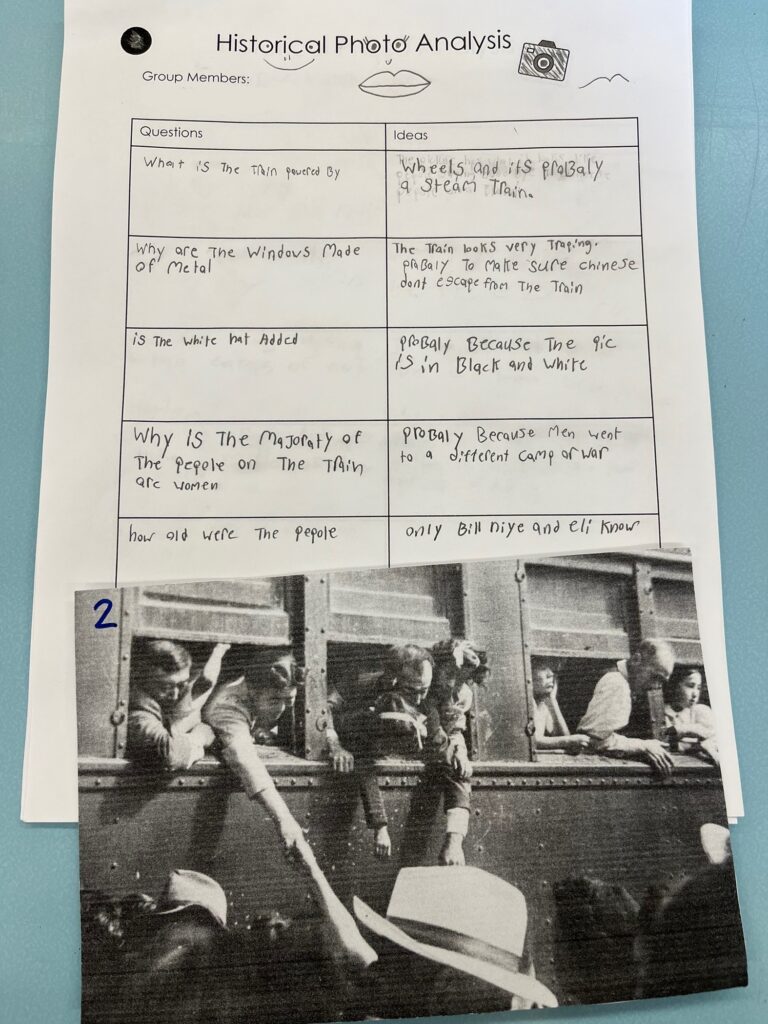

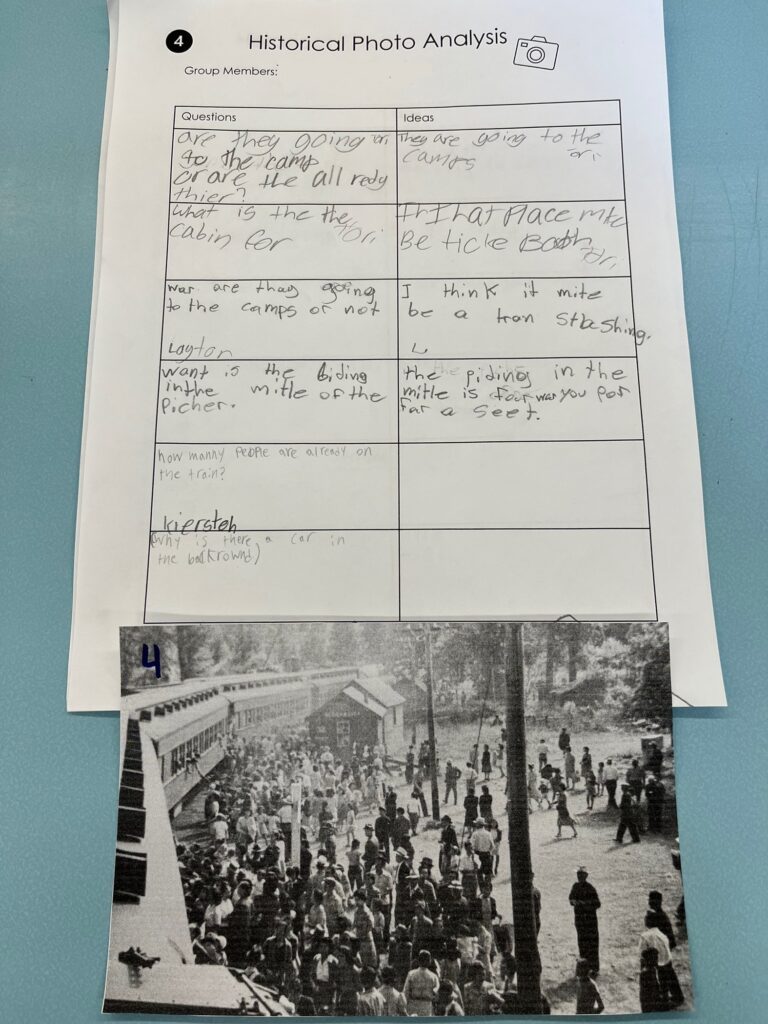


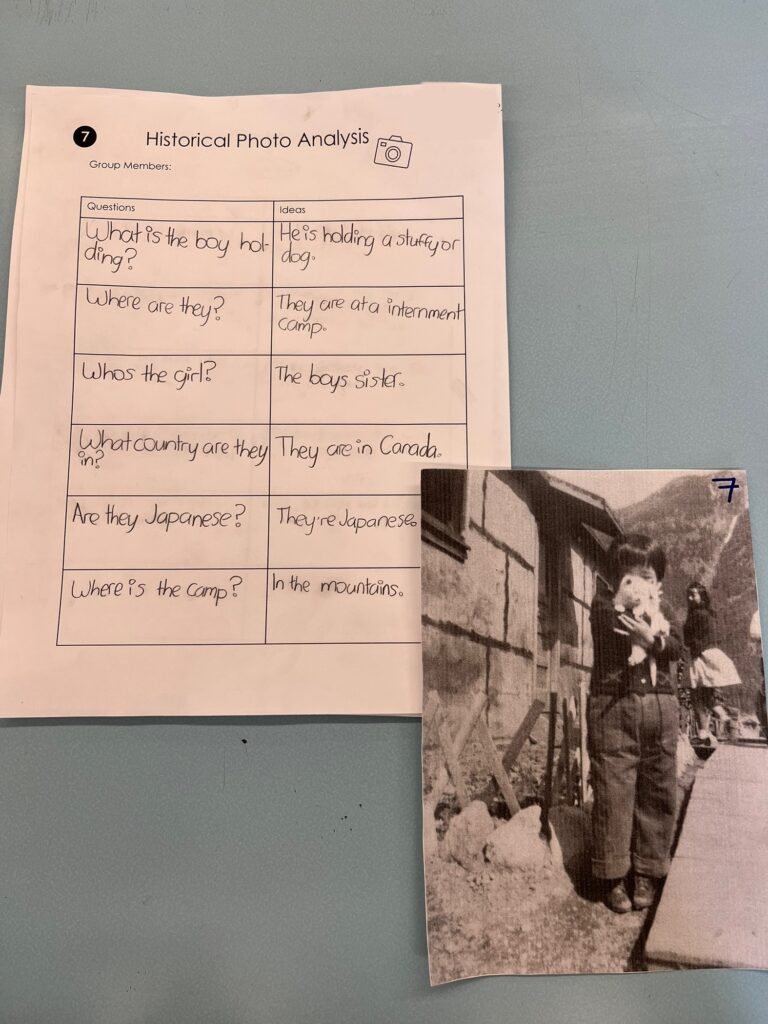

The photos are from the UBC open-source archive: https://open.library.ubc.ca
The lesson plan is designed from: https://www.bctf.ca/classroom-resources/details/japanese-internment-camps-in-british-columbia
Core Competencies: Critical and Reflective Thinking
Facet: Questioning and investigating
Profile: I can ask open-ended questions, explore, and gather information.
First Peoples Principles of Learning: Learning is holistic, reflexive, reflective, experiential, and relational (focused on connectedness, on reciprocal relationships, and a sense of place).
Big Idea:
- Canada’s policies and treatment of minority peoples have negative and positive legacies (5)
- Systems of government vary in their respect for human rights and freedoms (6)
Curricular Competency:
- Use Social Studies inquiry processes and skills to – ask questions; gather, interpret, and analyze ideas; and communicate findings and decisions (5&6)
Content:
- past discriminatory government policies and actions – internments (5)
- global poverty and inequality issues. including class structure and gender (6)