Evaporation is one of the ways to separate solutions – for our inquiry into this, students looked at how evaporation works without heat. This process took over a week, students were asked to measure from the base of their cups to where the water is filled to. However, if I were to redo this experiment I would add more salt, and less water so that both the creation of a solution and the separation of them is clear and not as lengthy.
Students were split into random groups (idea fromLiljedahl) and were instructed to add a tablespoon of salt into a clear plastic cup, then add water. They stirred and then set the cups to the side of the room. Each morning, one member of each group measured the amount of water and made a mark with permanent marker on the side.


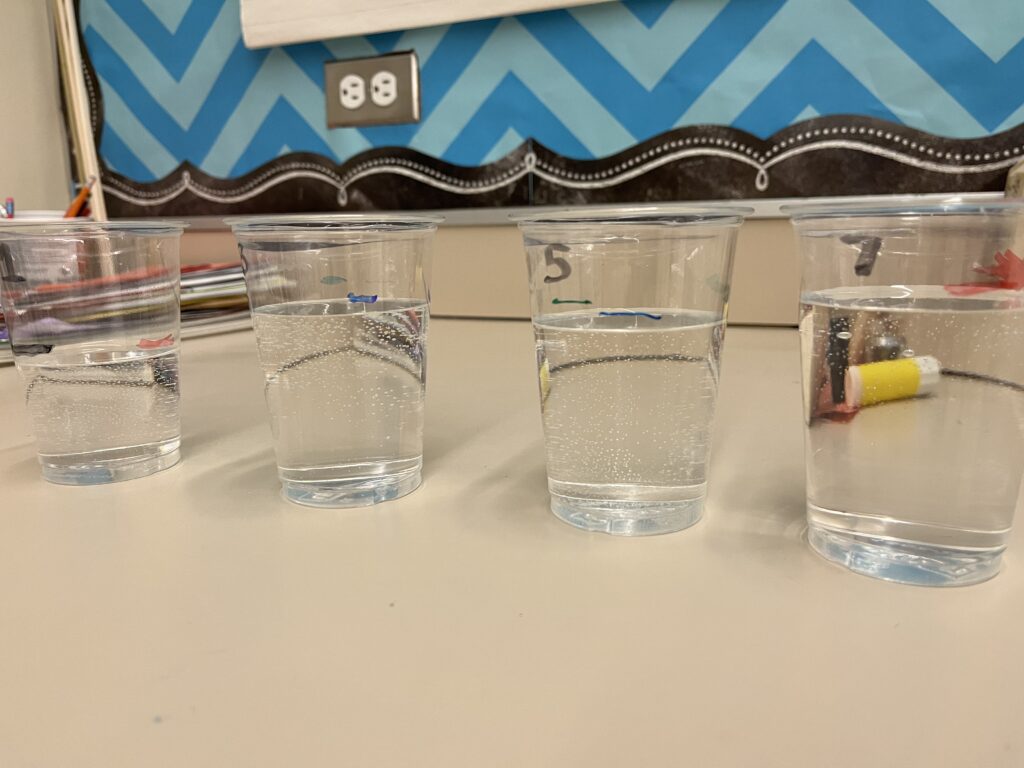
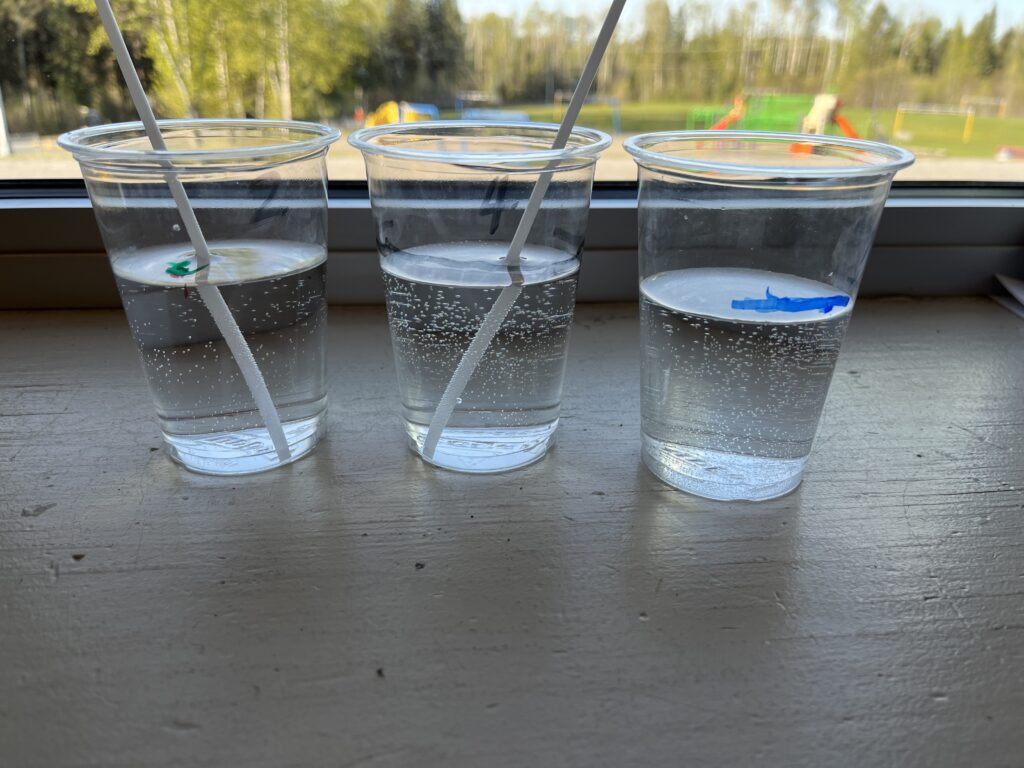
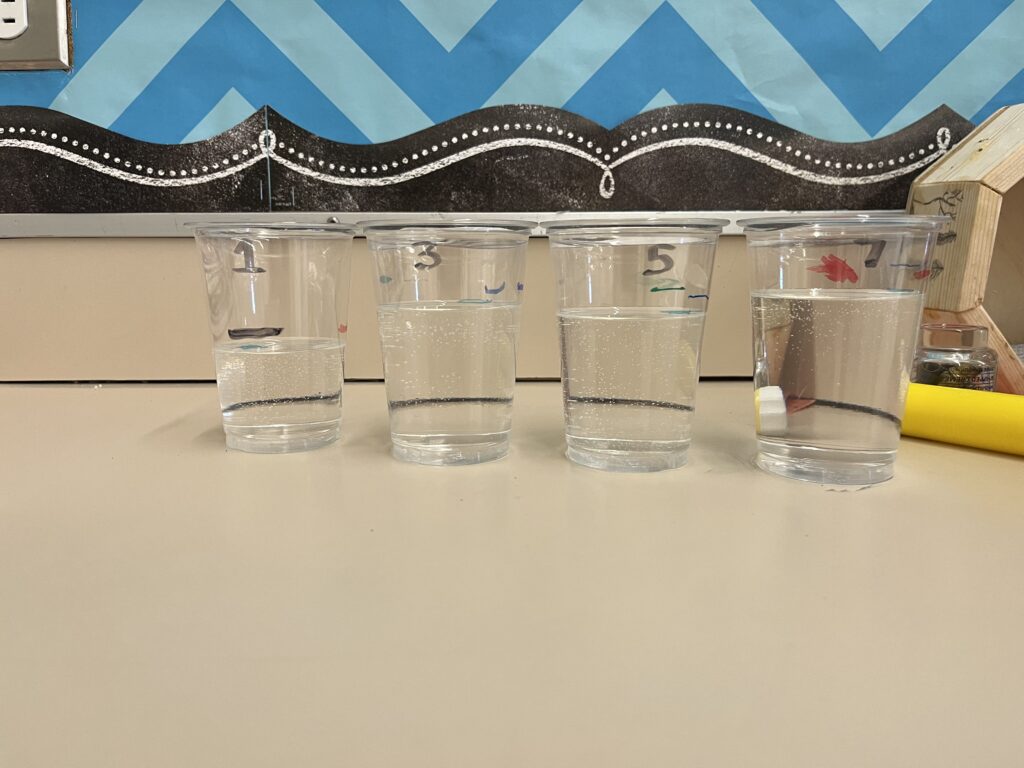
What went well? Students were able to make observations and see the amount of water decrease.
What needs work? I needed to set better instructions to help facilitate this learning better – many groups missed days and the experiment was a lot longer than it should have been as I instructed students to add too much water! So follow through and better instructions would benefit this activity!
Core Competencies: Critical Thinking
Facet: They reflect on and assess their experiences, thinking, learning processes, work, and progress in relation to their purposes.
Profile: I can ask questions, make predictions, and use my senses to gather information.
First Peoples Principles of Learning: Learning involves patience and time.
Big Ideas:
- Solutions are homogenous (5)
- Everyday materials are often mixtures (6)
Curricular Competencies:
- Observe, measure, and record data, using appropriate tools. (5&6)
Content:
- solutions and solubility (5)
- mixtures: separated using a difference in component properties (6)