Crystallization is one of the main ways to separate a liquid solvent from a solid solute, as well as an easy example to demonstrate for students.
Each step is a look at different parts of solutions:
- Start with a liquid solvent (water) – take note, is it cold or hot?
- Add solid solute (borax – sodium borate) – how much is being added?
- As the two substances are mixed together, students watched how the solution was formed, the water was originally clear-colourless, then turned into a suspension (foggy-white) as the borax was added, then returned to its clear-colourless state as the borax dissolved into the water. Once the solution was made, more borax was added to create a supersaturated solution, again the solution was made once it was clear (save the extra borax at the bottom of the glass).
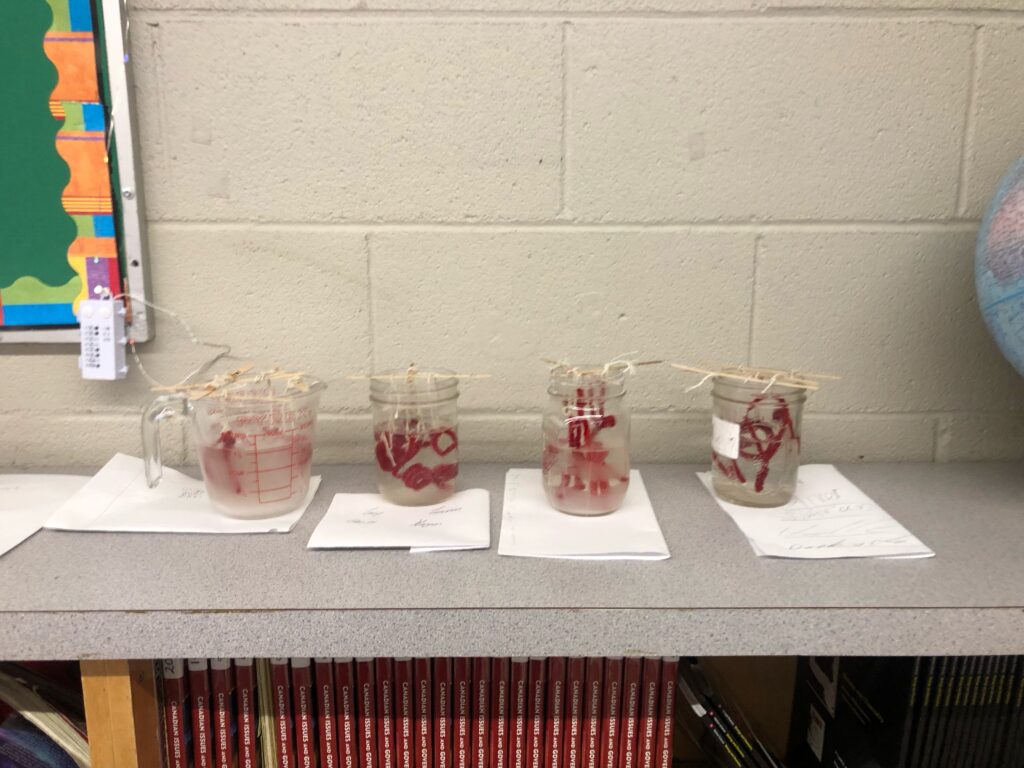
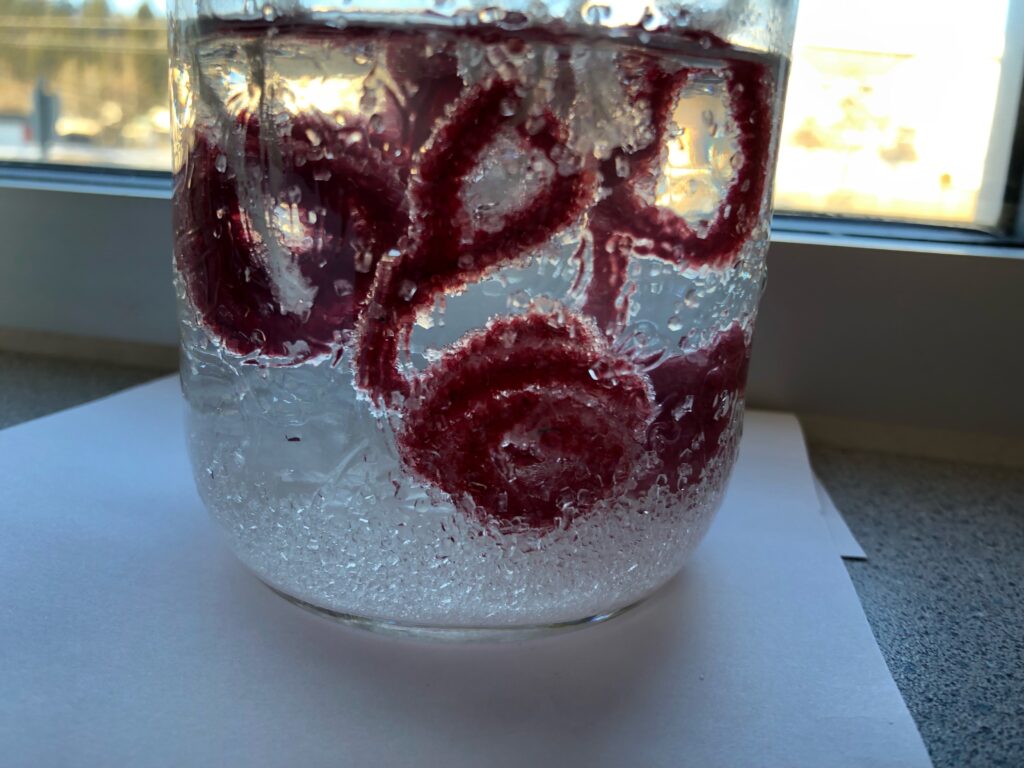
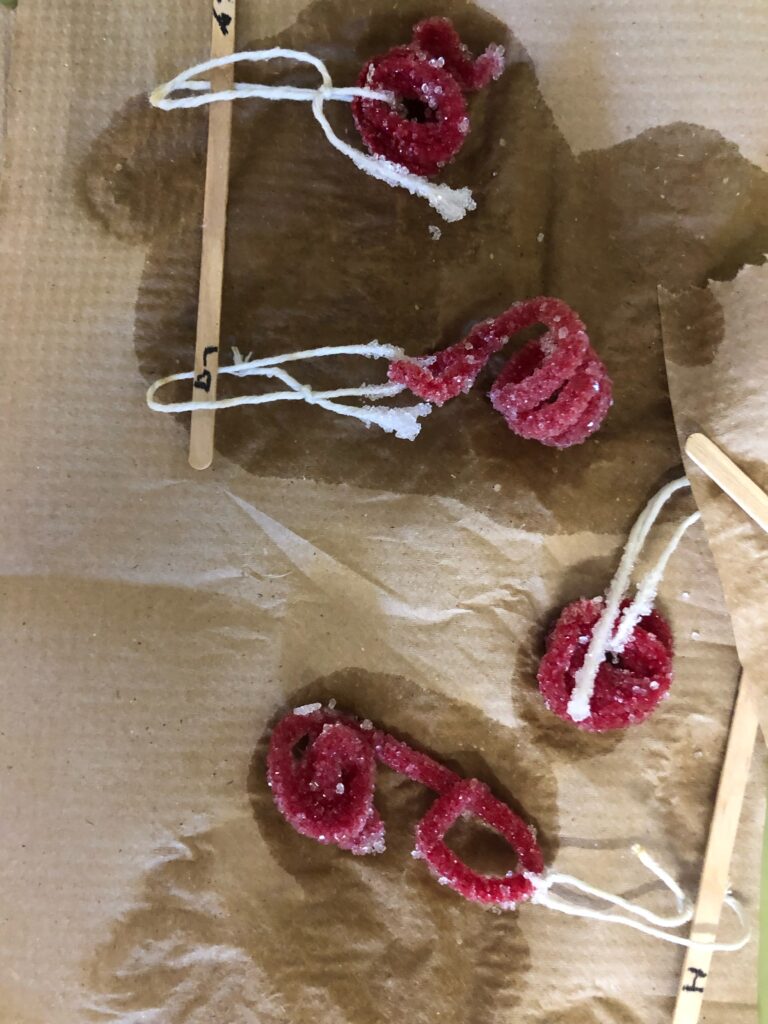
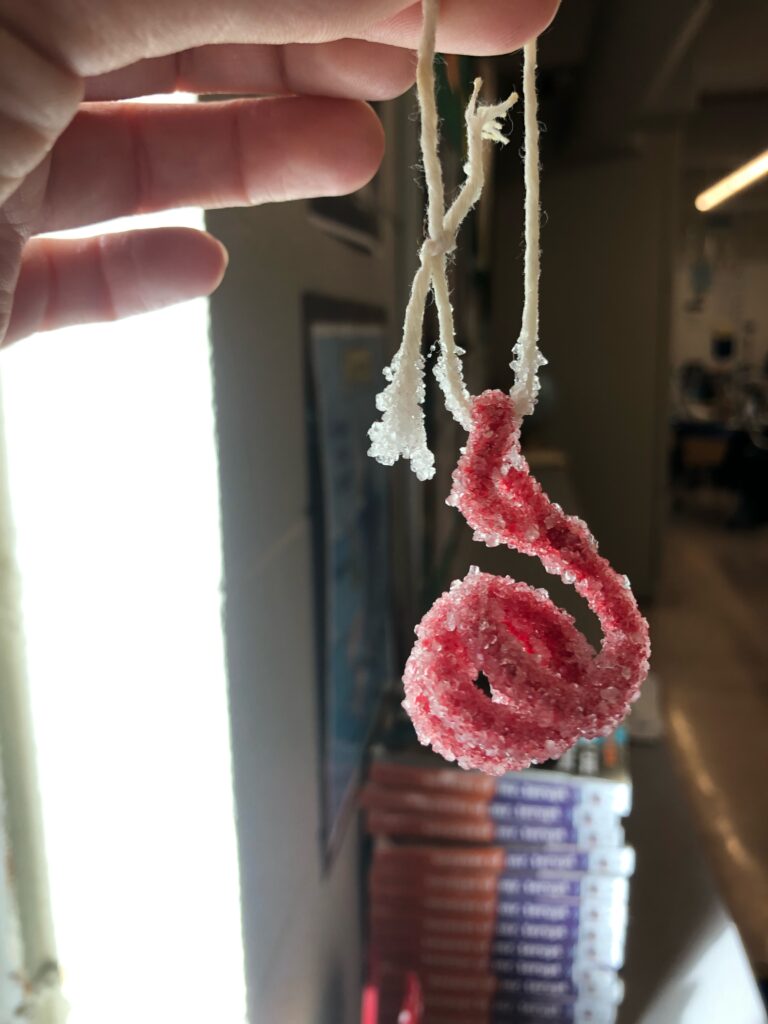
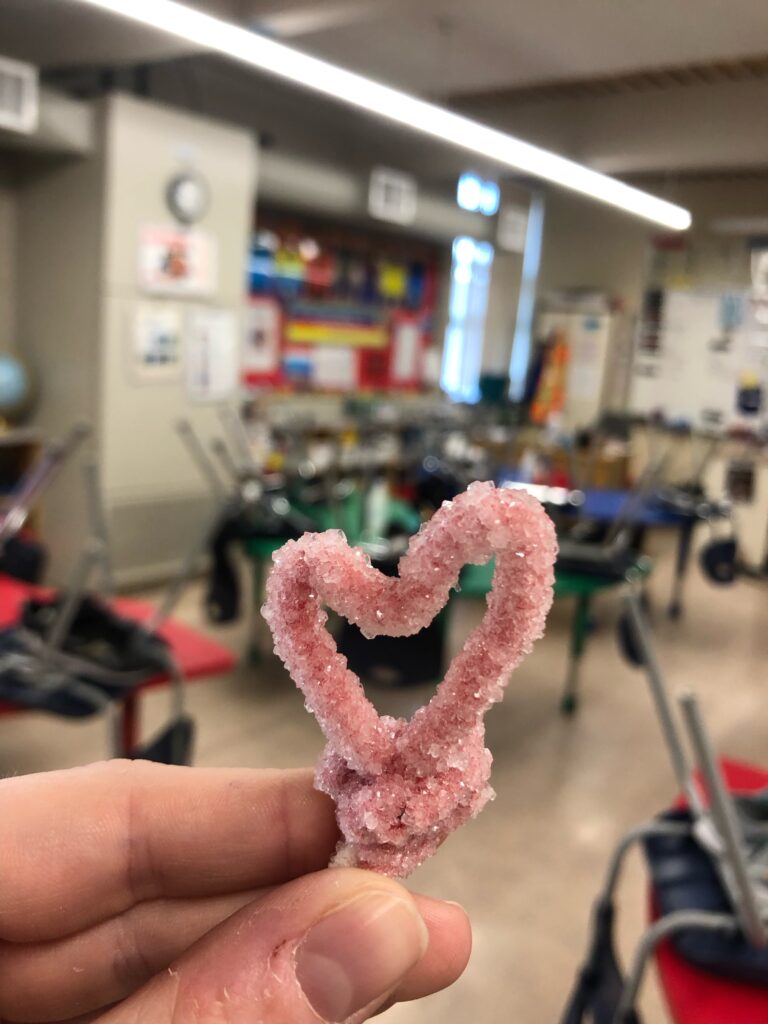
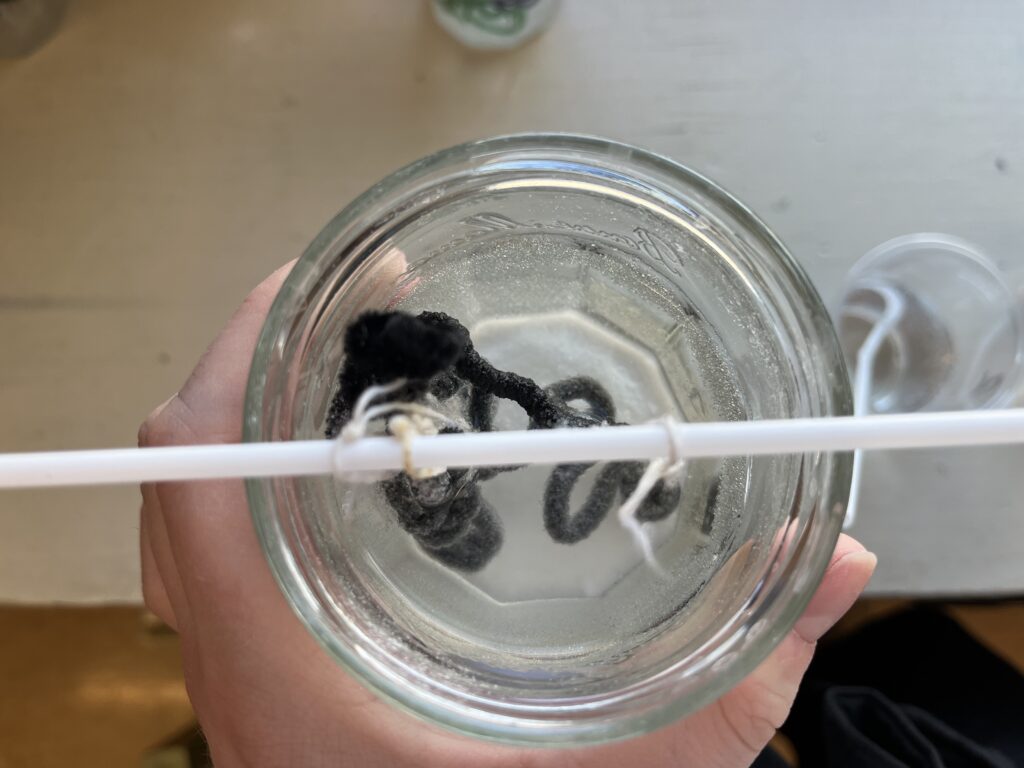
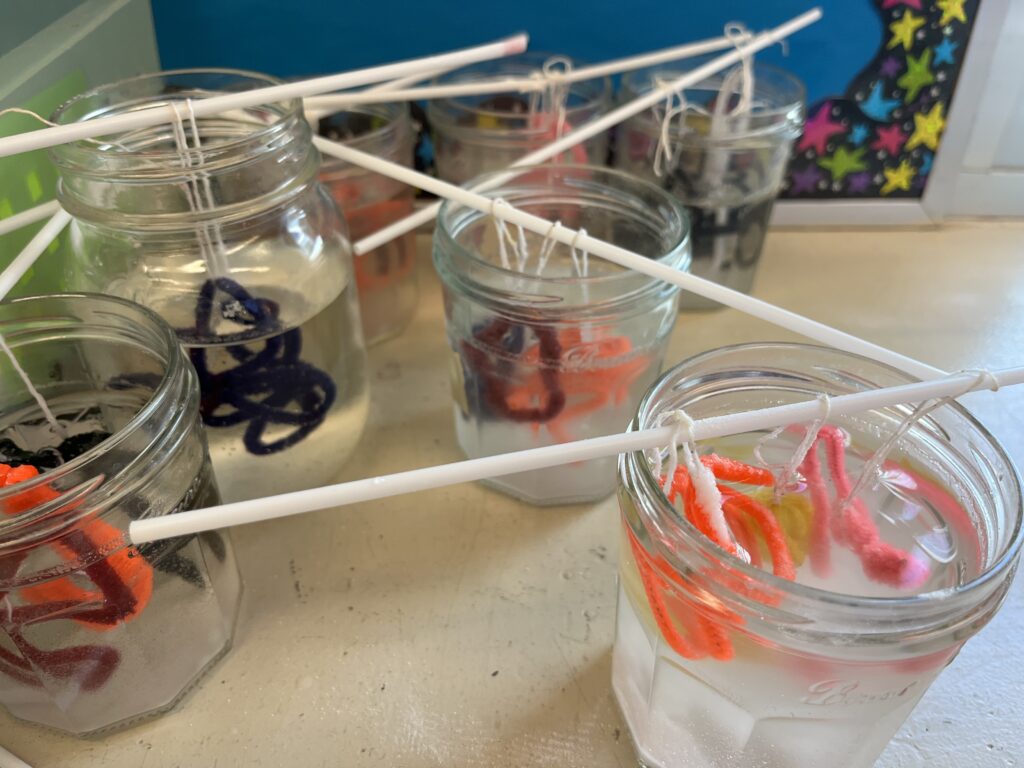
- Students created shapes out of pipe cleaner, they then tied to a popsicle stick and let it sit in their colourless solutions overnight. As the water cools, the borax forms crystals again, but on the pipe cleaner – which forms a pretty, fairly tough crystalline structure, demonstrating the process of crystallization.
- For clean up, adding hot water dissolves the formed crystals on the jar, which in theory suggests you could redo the experiment with the same borax.
The importance of this activity was made clear as students completed a summative assessment on solutions, where crystallization needed to be defined. Students were able to recall this experiment, and name both solvent and solute used, and further extended their answers to a more general understanding of separating solutions.

Core Competency: Creative Thinking
Facet: Evaluating and developing
Profile: I am willing to accept ambiguity, setbacks, and failure, and I use them to advance the development of my ideas.
First Peoples Principles of Learning: Learning is holistic, reflexive, reflective, experiential, and relational (focused on connectedness, on reciprocal relationships, and a sense of place).
Big Ideas:
- Solutions are homogenous.
Curricular Competency:
- Transfer and apply learning to new situations (5)
Content:
- solutions and solubility (5)
EDUC 490 – Crystallization
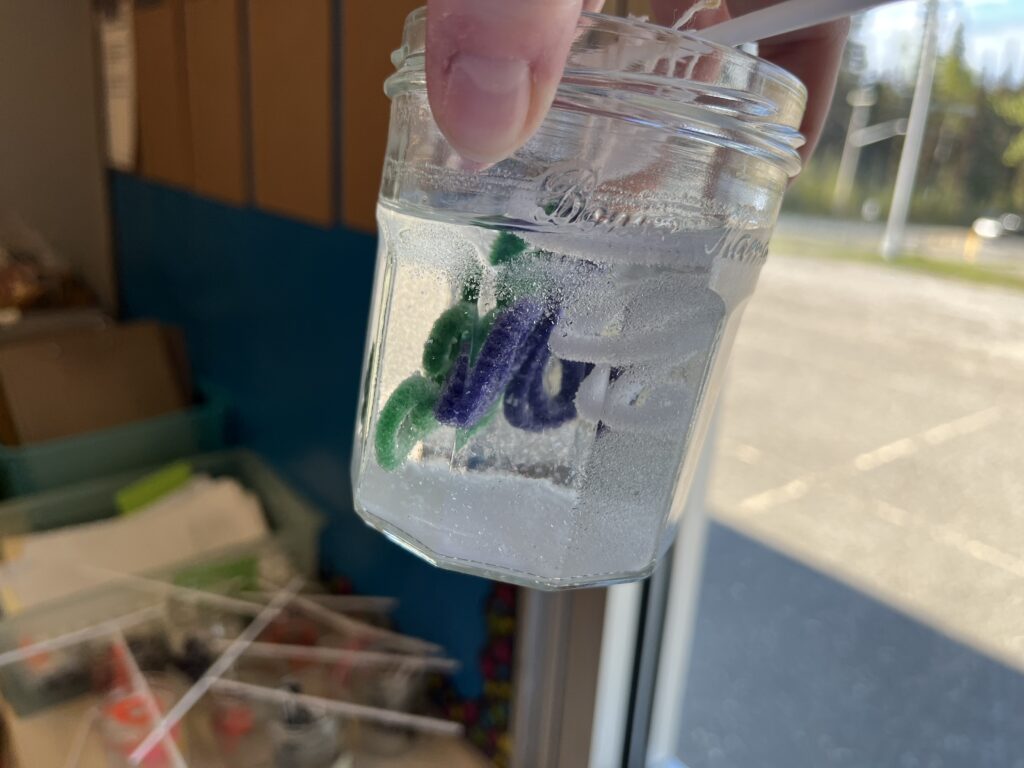
This was done again in EDUC 490 to learn about different ways to separate mixtures! Which is a grade 6 concept!
Big Ideas:
- Everyday materials are often mixtures (6)
Curricular Competency:
- Transfer and apply learning to new situations (6)
Content:
- mixtures: separated using a difference in component properties (6)